Japandi interior design for Dubai apartments
Japandi in Dubai is calm, low and natural: a warm earthy palette, mixed pale and dark wood, grounded furniture and a small number of tactile objects. Check seat, bed and table heights for the people using them. The style needs enough closed storage to preserve the empty space, and the final budget must come from current products that fit.
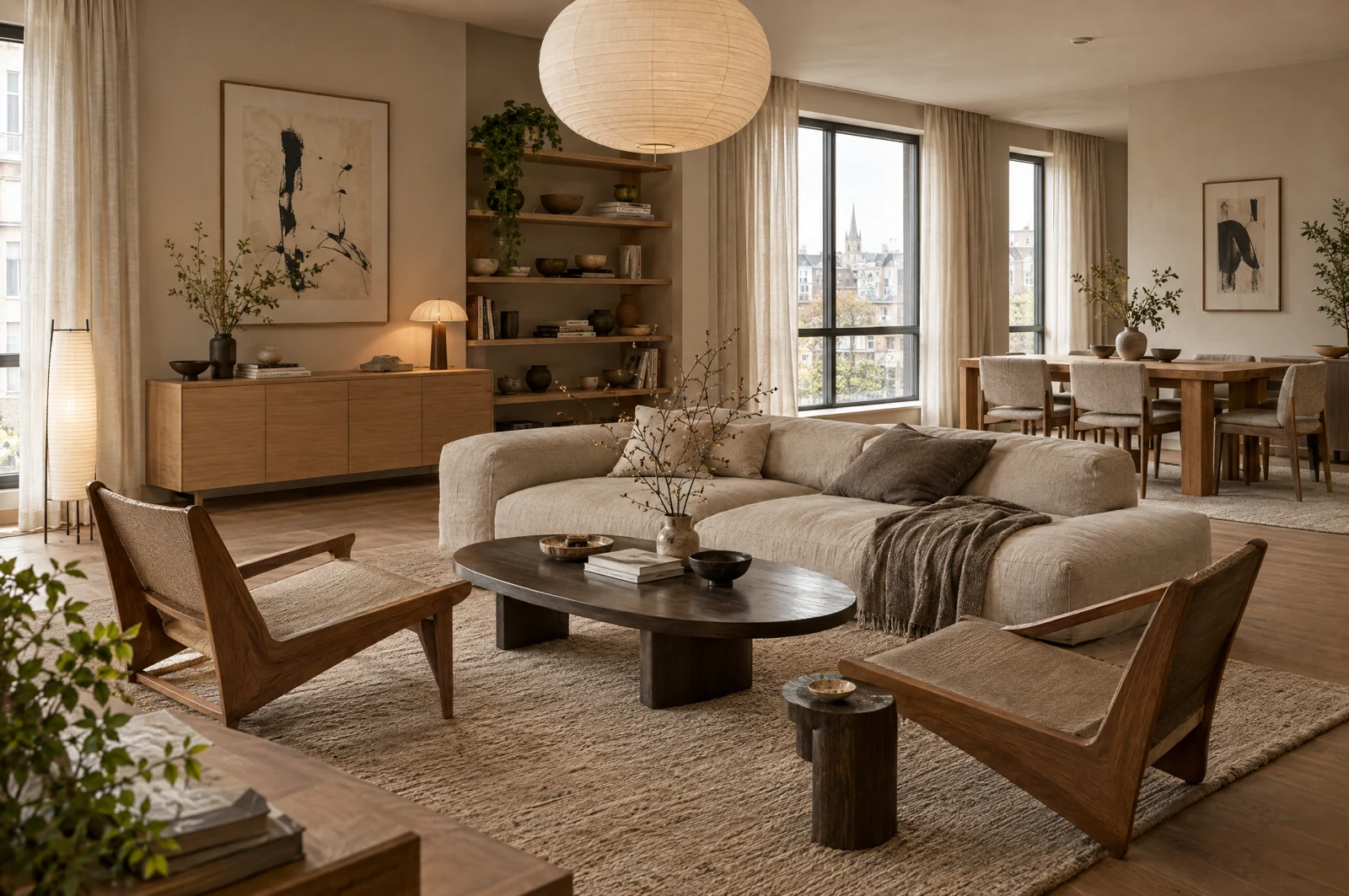
Japandi combines Japanese restraint with Scandinavian warmth. Where minimalism can feel architectural and Scandinavian can feel more layered, Japandi sits low and grounded, with earthy materials and empty space treated as something to keep rather than fill.
The look, in short
The palette is warm and earthy: a warm white on the walls, greige or clay textiles, a deliberate mix of pale oak and darker walnut, a charcoal or blackened-metal contrast, and one muted earth accent, either terracotta-clay or soft sage if you lean cooler. Wood is matte, raw or oiled, never glossy, and the mix of light and dark is intentional. Textiles are linen, cotton, wool, and paper in undyed, natural tones for texture, not pattern. Surfaces are stoneware, raw ceramic, rattan or cane, and stone.
Furniture sits low and grounded with clean, simple lines. And the defining move is what you leave empty: one or two considered objects on a surface beat a dozen. The space between things is part of the design.
Room by room in a Dubai apartment
Living room. A low, clean-lined sofa in a natural weave, a low slatted or solid-wood coffee table, and a natural-fibre rug. One sculptural lounge chair or a floor cushion. A low sideboard in mixed wood holds a few pieces of stoneware and a single stem in a vase. Lighting is warm and soft: a paper or bamboo shade gives the diffuse glow the look wants. The surfaces stay mostly clear; that emptiness is the calm.
Dining. A simple wood-frame table, low-slung chairs, and almost nothing on top: a stoneware bowl, maybe a paper lantern above. In an open-plan Dubai living-dining, the same mix of pale and dark wood ties the two zones together quietly.
Bedroom. Japandi's natural home. A low platform bed, layered natural bedding in warm neutrals, and a single stem or a paper lamp rather than a cluttered nightstand. A wool or jute rug underfoot, a rattan basket, a raw-oak stool. The room feels like a place to switch off because there's so little asking for attention.
Bathroom and entryway. Stone, wood, and stoneware: a wooden tray, a matte ceramic vessel, a rattan basket, and one live or faux plant. Nothing shiny, nothing surplus. A single stem in a rough ceramic vase at the entry sets the tone before you've stepped inside.
A note on colour: Japandi is easy to get wrong by adding too much. The palette stays within its warm earthy neutrals, and the only real variety comes from the wood mix and the texture of natural materials. If you want a lift, it's one muted earth tone (a clay cushion, a terracotta bowl) repeated once or twice, never a scatter of accents.
Low furniture and ergonomics
Low furniture can make a room feel open, but it is not suitable for every body or daily routine. Before choosing it, test:
- seat height and depth for comfortable standing and sitting
- bed height with the intended mattress
- coffee-table height against the sofa seat
- dining-chair and table clearance
- reach to bedside surfaces and switches
- robot vacuum or manual cleaning access under each piece
Keep dining, working and supportive seating at usable heights even when the visual direction is low. A coherent room can mix heights when the materials and lines remain related.
Storage tradeoffs
Empty surfaces require hidden capacity. Use a low sideboard for media and household items, closed bedside storage where needed and full-height wardrobe space that matches the wall. Open shelves should have a specific purpose and a strict display limit. Otherwise the room loses the visual pause that defines the style.
A hypothetical complete budget split
For any total furniture allowance, a first draft could assign:
| Area | Share of the allowance |
|---|---|
| Living and dining anchors | 42% |
| Bedroom anchors | 33% |
| Closed storage | 12% |
| Rugs and lighting | 8% |
| A few tactile objects | 2% |
| Uncommitted until delivery and assembly are confirmed | 3% |
Use these percentages as a starting point, then adjust them around the furniture your rooms need and the pieces you already own.
Who Japandi suits
It suits people who want deep calm and don't need every corner filled, who read empty space as luxury rather than something to fix. It's excellent in compact Dubai apartments, because low furniture and clear surfaces make a small room feel larger and taller. It's a harder fit if you love colour, collect and display, or want a room that reads warm and full at a glance. If you want the same pale, natural base but cosier and more layered, Scandinavian is the warmer cousin; if you want it even more stripped and architectural, modern minimal takes the restraint further.
Whichever way you lean, the Design Pack includes layouts, the linked shopping list, a real budget, furnished renders and an interactive walkthrough. HomePrint is design-only, so you buy directly from the retailers. For homes outside Dubai, send your city, country and floor plan first so retailer coverage can be confirmed.
Frequently asked questions
Is Japandi just minimalism with a Japanese label?
It overlaps, but it's warmer and lower. Minimalism can read cool and architectural; Japandi is earthy and tactile, built on natural, slightly imperfect materials (raw oak, linen, stoneware, rattan) and furniture that sits low and grounded. The calm comes from empty space and considered objects, not from stripping the room bare. It feels lived-in, not showroom.
Won't low furniture feel awkward in an apartment?
It reads intentional, not awkward, as long as the whole room comes down together. A low sofa, a low coffee table, and a low sideboard make ceilings feel taller and the space calmer, which is genuinely useful in a compact Dubai apartment. I plan the heights so they agree, and keep one or two pieces at normal height where daily use needs it.
What makes a room Japandi rather than Scandinavian?
Japandi is quieter, lower, and darker in its wood. Scandinavian is pale, cosy, and layered with soft texture; Japandi mixes pale and dark wood, keeps the palette warm and earthy, and treats empty space as a feature rather than filling it with cushions and throws. Both are calm, but Japandi is the more stripped, grounded, meditative of the two.
Which materials matter most?
Natural, tactile, and a little imperfect: raw or oiled oak, linen, paper, stoneware, rattan, and blackened metal. Texture does the work that colour and pattern do elsewhere. Avoid anything glossy, chrome, or brass, and avoid busy pattern. Japandi wants surfaces you'd want to touch, not ones that shine.