Eight interior design styles for Dubai apartments
HomePrint plans eight broad styles: modern minimal, warm classic, Scandinavian, Japandi, mid-century, industrial, coastal and bold eclectic. Choose by the light, furniture you already own, upkeep you accept and the way you use the rooms. The style affects product choices and budget priorities, while the Design Pack fee depends on home size.
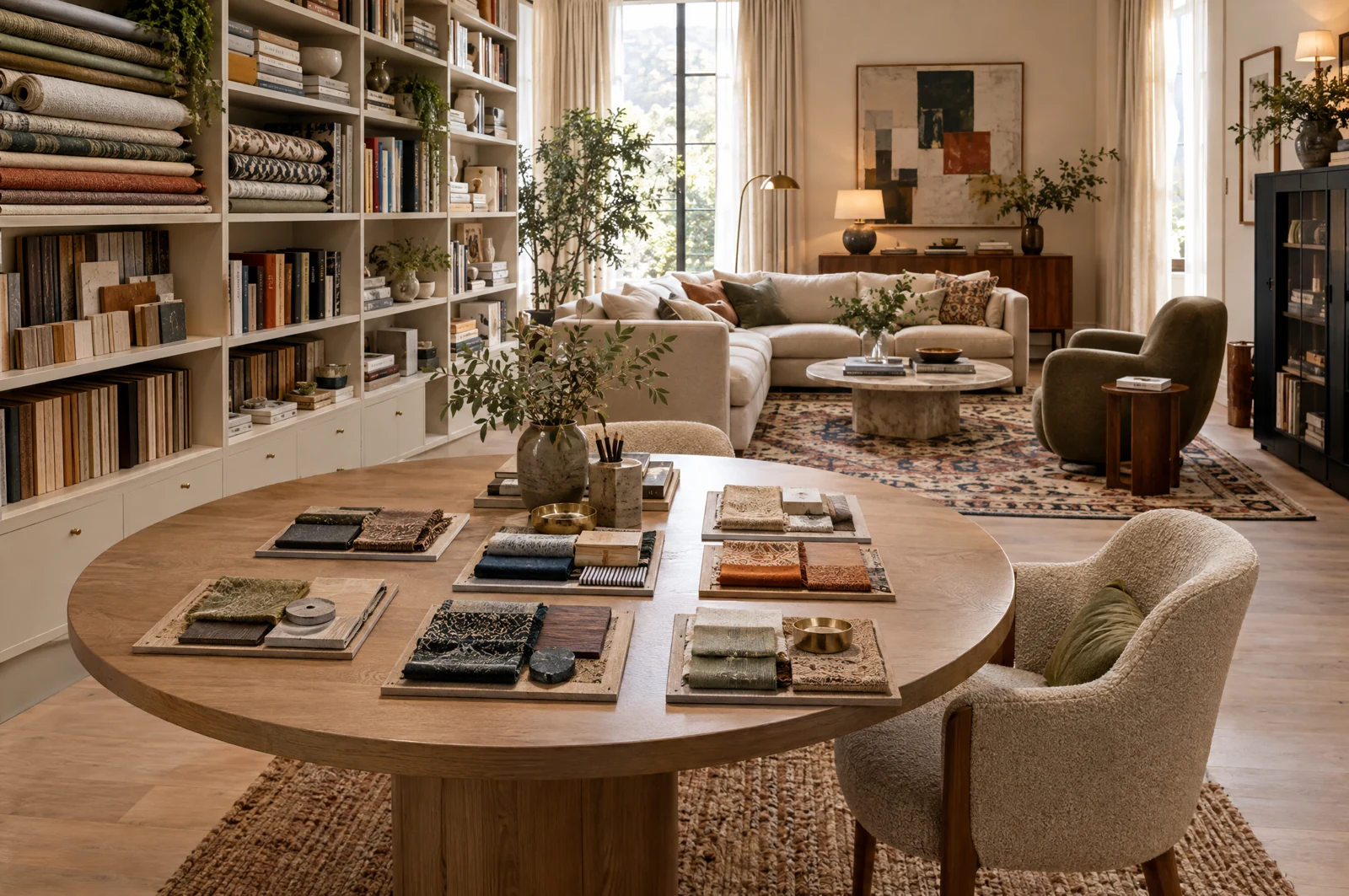
Picking a style sets the palette, materials, furniture shapes and storage approach. It should also respond to the apartment and what you already own. Below is a practical comparison of the eight broad directions HomePrint uses, followed by a fuller explanation of each.
If you'd rather not read all eight, take the style quiz. It takes about three minutes and points you at the closest fit. I confirm it against your floor plan before anything gets designed.
The eight styles
| Style | Palette and warmth | Upkeep | Works well with existing | Budget pressure |
|---|---|---|---|---|
| Modern minimal | Warm white, neutral textiles, one light wood | Clear surfaces need closed storage | Simple neutral pieces with clean lines | Storage and one strong anchor |
| Warm classic | Cream, caramel, walnut, aged metal | Layered textiles need regular care | Traditional wood furniture and comfortable seating | Upholstery, solid wood and rugs |
| Scandinavian | Soft white, pale wood, muted accents | Light fabrics show marks; washable covers help | Pale wood and practical modular storage | Textiles, lighting and storage |
| Japandi | Greige, clay, light and dark wood | Fewer objects, but natural finishes need care | Low simple furniture and handmade objects | Solid wood and low-profile anchors |
| Mid-century | Warm cream, walnut, one retro accent | Raised furniture is easy to clean under | Vintage sideboards, tapered-leg pieces | One wood anchor and seating |
| Industrial | Grey, black steel, aged wood, cognac | Dark finishes hide some wear; dust shows on open shelves | Metal, leather and rough wood pieces | Seating, lighting and large metal-and-wood pieces |
| Coastal | Soft white, sand, muted blue, pale wood | Indoor and balcony materials need different care | Light wood, linen and woven pieces | Durable upholstery and outdoor-rated items |
| Bold eclectic | Calm base with repeated strong accents | Displays and textiles take more upkeep | Art, inherited furniture and collected objects | One statement anchor, framing and storage |
Treat budget pressure as a priority guide rather than a price range. The current total depends on the room, destination and products available when the list is built.
Modern minimal
Restraint with warmth. Few pieces, clean lines, calm empty surfaces and texture instead of pattern. Natural oak and soft neutral linen keep it from feeling cold. It suits people who want visual quiet and anyone furnishing a smaller unit where clutter shows quickly.
Warm classic
Comfort with quiet formality. Familiar shapes (a rolled-arm sofa, a wingback chair, turned wood legs) in warm, grounded colours, layered with a wool rug and linen drapes. Symmetry is welcome. It reads settled and gracious rather than trendy, and it ages well. Suits families, people who keep furniture for a decade, and anyone who finds strict minimalism a bit stark.
Scandinavian
Light, airy, and cosy: the hygge look. Pale wood and soft white form the base; warmth comes from layered wool, sheepskin, and linen, plus a muted accent or two. It treats daylight as a material, so it flatters Dubai's bright, glazed apartments. Suits anyone who wants a calm, functional home that feels warmer and more textural than plain minimalism.
Japandi
Japanese restraint meets Scandinavian warmth. Low, grounded furniture in a warm earthy palette over a mix of pale and dark wood; natural, slightly imperfect materials like raw oak, linen, stoneware, and rattan. Empty space is the point. Quieter and lower than Scandinavian, warmer than minimalism. Suits people who want deep calm and don't need every corner filled.
Mid-century
1950s and 60s modern: warm walnut and teak, tapered legs, clean organic shapes, and one or two confident retro colours like mustard, burnt orange, or teal. Optimistic and sculptural without being fussy. Suits people who want warmth and personality in a form that still feels current, and anyone drawn to furniture that looks designed.
Industrial
Warehouse and loft: black steel, aged wood, concrete-look surfaces, cognac leather, exposed-bulb lighting. Dark and grounded, warmed by wood and leather so it reads loft-cosy rather than cold. Suits characterful apartments with concrete or exposed ceilings, and people who like a room that feels solid and edited rather than soft.
Coastal
Light, breezy, seaside. Soft whites and warm sand with blue and aqua accents; natural fibres like rattan, jute, linen, and rope, plus pale washed woods. A natural fit for marina and beachside apartments. Restrained and tasteful, not nautical-kitsch. Suits anyone with a water view or who simply wants their home to feel like an exhale.
Bold eclectic
Confident layering with a clear anchor. Saturated colour, mixed pattern, furniture from different eras, a gallery wall and a statement chair are held together by a calm base and one or two repeating accents. It suits people with art or objects to display and a high tolerance for colour.
Still not sure?
That's normal. Most people land between two of these until they see them against their own space. Start with the quiz; it does the sorting for you. Every style is the same flat price to design, so the choice is purely about the home you want to come back to.
Frequently asked questions
How do I know which style is right for my apartment?
Start with the light and the pieces you already own. A bright, glazed apartment carries pale styles like Scandinavian or coastal beautifully; a darker unit is happier with warm classic or industrial. If you're stuck, the style quiz reads your answers and points you to the closest fit, then I confirm it against your floor plan.
Can I mix two styles?
Yes, and most real homes are a blend. Japandi is itself Japanese plus Scandinavian; mid-century sits happily inside a modern-minimal room. I anchor the pack to one lead style so the whole place hangs together, then borrow from a second where it earns its place. What I avoid is five styles fighting in one room.
Do you only work in these eight?
These eight cover almost everything people ask for in Dubai, from pared-back rentals to layered family homes. If your taste sits between two of them, that's fine. I lead with the nearest one and adjust. If you have a very specific reference, send it with your floor plan and I'll match the direction to it.
Does the style change the price?
No. The Design Pack is a flat fee by the size of your place, whatever style you choose. What changes with style is where the furniture budget lands, a statement velvet sofa versus a pale linen one, rather than what I charge to plan it.