Scandinavian interior design for Dubai apartments
Scandinavian style in Dubai uses soft white, pale wood, useful storage, warm light and layered natural-looking textiles. It is softer and more practical than modern minimal, and higher and more textile-led than Japandi. Price the exact room from current products after the storage and layout needs are clear.
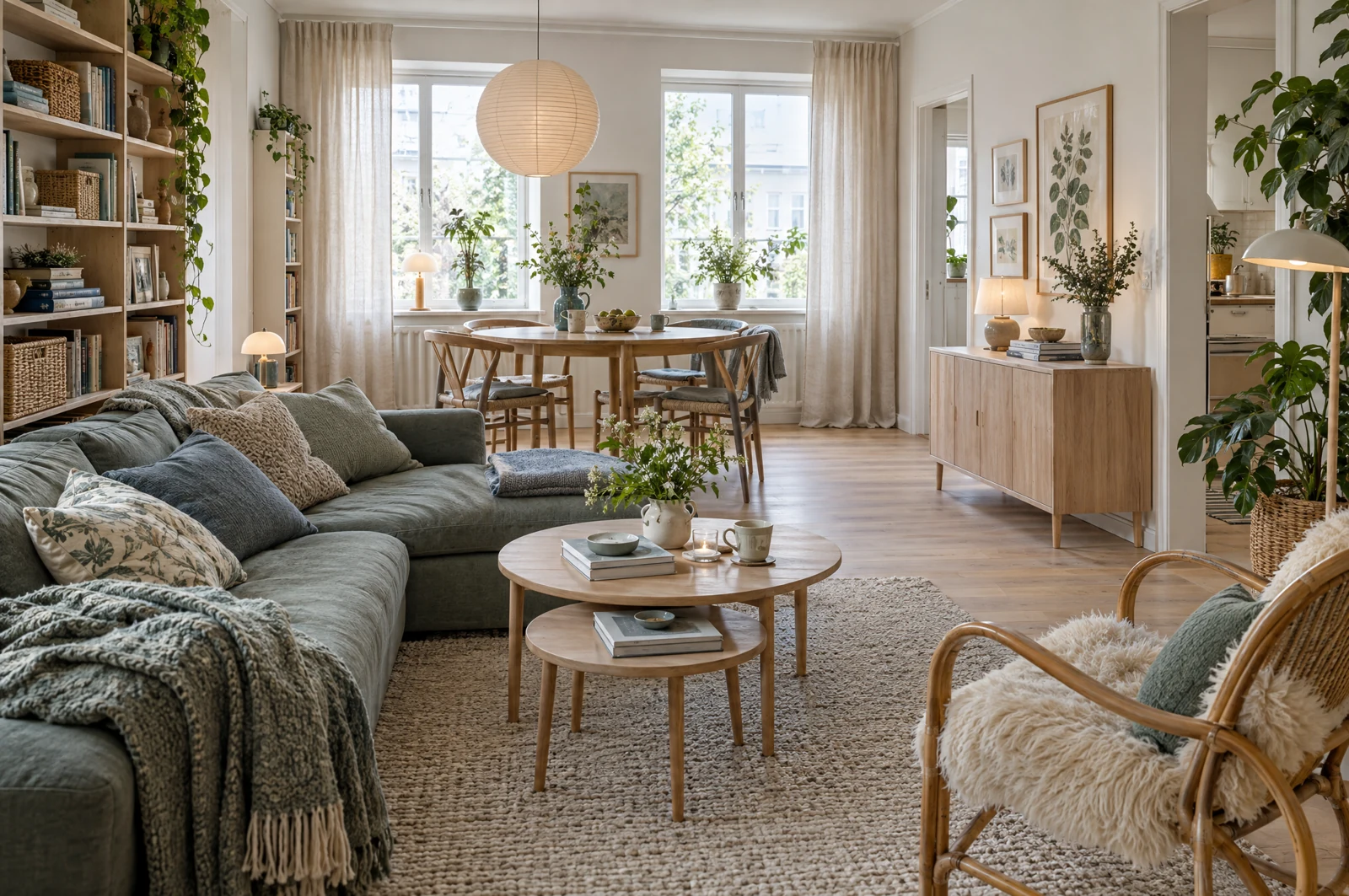
Scandinavian is the style Dubai's bright apartments were made for. Where a heavy, dark scheme can feel like it's fighting all that glass, the Nordic look leans into daylight: pale wood, soft white, and just enough cosy texture to keep it from feeling clinical. The Danish word people reach for is hygge: the sense of a room being calm, warm, and easy to settle into. Done well, it's the most liveable of the light styles.
The look, in short
The base is pale and soft: a warm-leaning white on the walls, pale grey or oatmeal textiles, and one light wood, whether birch, ash, or whitewashed oak. Over that go a small number of muted accents: dusty blue, sage, a little soft black, a touch of tan leather. Warmth is a job for texture, not colour. Wool, sheepskin, linen, and jute layer so the room feels held rather than bare. Forms are simple with rounded edges; legs are slim and tapered. Metal is matte black or brushed steel in small amounts. No chrome, no brass, no gloss, no bold pattern.
The daylight itself is treated as a material. Keep windows light, surfaces pale, clutter low, and the room does half the work on its own.
Room by room in a Dubai apartment
Living room. A pale, soft sofa anchors it, layered with a wool throw and a couple of textured cushions. A light-oak or birch coffee table, a natural jute or wool rug, and a slim-legged armchair complete the seating. Lighting matters more here than in most styles: a warm floor lamp or an arc lamp gives the low, cosy glow the look depends on, since Dubai evenings want something softer than downlights. A birch bookcase or a low sideboard holds books and a few ceramics.
Dining. A pale-wood table with simple, light chairs, often the same birch or ash as the living room so the open-plan space reads as one. A single pendant over the table, a linen runner or nothing at all, and a bowl or a small plant. Restraint here keeps the whole zone airy.
Bedroom. This is where hygge lands hardest. A pale-wood bed frame, layered natural bedding in white and soft grey, a sheepskin over a chair or the bed end, and two small bedside lamps for a warm glow. A wool rug underfoot so your feet meet something soft in the morning. The wardrobe stays light-toned so the room reads calm.
Bathroom and entryway. Pale, textured, and simple: a jute or cotton runner, a wood-framed round mirror, a woven basket, and a plant. Small touches, natural materials, nothing shiny.
Storage and textiles do the work
Scandinavian rooms look relaxed because useful objects have a place. Combine closed storage for cables, paperwork and household supplies with one limited open shelf for books and ceramics. In a small apartment, storage furniture with raised legs keeps the floor visible and is easier to clean under.
Use textiles in layers with different jobs:
| Layer | Purpose | Practical choice |
|---|---|---|
| Curtain | Soften glazing and control light | Washable or easily cleaned fabric, full measured drop |
| Rug | Warm the seating or bedside zone | Correct size, suitable pile and care method |
| Throw | Add warmth and muted colour | Washable fibre for daily use |
| Cushions | Support the sofa and repeat one accent | Removable covers, limited quantity |
Dubai air conditioning can make a room feel cool, but heavy layers still need storage and cleaning. Choose the amount you will use rather than copying a winter-room photograph.
Scandinavian, Japandi or modern minimal?
| Style | Furniture height | Display | Main warmth source |
|---|---|---|---|
| Scandinavian | Standard to lightly raised | Useful open storage plus closed storage | Textiles and warm lamps |
| Japandi | Lower and more grounded | Very few objects | Wood, linen, paper and ceramic texture |
| Modern minimal | Clean and often slim | Mostly closed storage | Restrained texture and light wood |
Set the budget after the required storage, seating and lighting are known. A current total needs direct product pages and the complete room list.
Who Scandinavian suits
It suits anyone who wants a calm, functional home that still feels warm, and it's a natural choice for Dubai's bright, glazed apartments where the pale palette makes the most of the light. It's forgiving to live in, because the texture hides a little wear and the light base makes rooms feel larger. It's less suited to people who want drama or saturated colour. If you love the pale, textural base but want it lower and more grounded, Japandi takes the same warmth in a quieter, more Japanese direction. And if your apartment has a water view, the closely related coastal look leans the same palette toward the sea.
The Design Pack includes layouts, the linked shopping list, a real budget, furnished renders and an interactive walkthrough. HomePrint is design-only, so you buy directly from the retailers. For homes outside Dubai, send your city, country and floor plan first so retailer coverage can be confirmed.
Frequently asked questions
What's the difference between Scandinavian and minimalism?
They share a pale, calm base, but Scandinavian is warmer and more textural. Minimalism strips back to empty surfaces; Scandinavian layers wool, sheepskin, linen, and jute over the same pale palette so the room feels cosy rather than bare. Think hygge, not gallery. If you want it even quieter, that's minimalism; if you want it cosier, this is your style.
Does Scandinavian work in Dubai's climate?
It works beautifully, because it's built around daylight and Dubai has plenty of it. Pale surfaces bounce the light, so bright, glazed apartments feel airy rather than washed out. The cosy layers, from wool throws to sheepskin to a soft rug, read as texture and warmth indoors, and they don't fight the air conditioning the way heavy, dark schemes can.
Is it an all-IKEA look?
IKEA is Scandinavian at the source, so a lot of the pack can come from there, which keeps it affordable. I can still mix in a solid-wood bed or a well-made lamp from another retailer with confirmed UAE stock. The look is about pale wood and layered texture, not a single store.
What colours can I add without breaking it?
Keep the base pale and add one or two muted accents like dusty blue, sage, soft black, or tan leather. Those read as calm punctuation rather than colour. What breaks it is anything saturated or glossy, or too many accents at once. One accent, repeated a few times around the room, is the whole trick.