Modern minimal interior design for Dubai apartments
Modern minimal in Dubai means a warm, edited apartment: few pieces, clean lines, calm empty surfaces and warmth from oak, linen and soft light. Its practical requirement is enough closed storage to keep daily objects out of sight. Budget the sofa, storage and one useful anchor first, then price the exact room from current products.
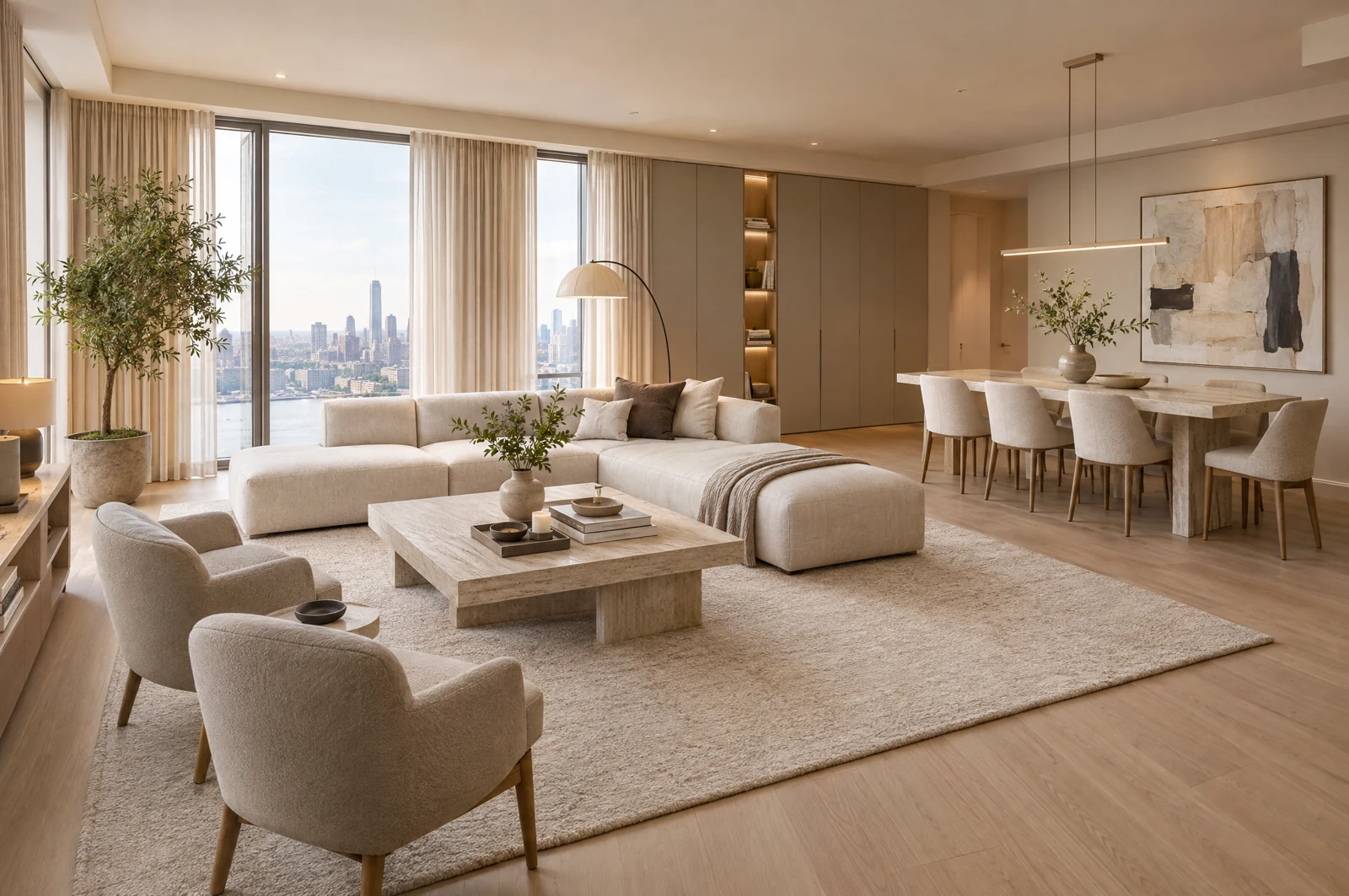
In a bright, glazed apartment, a pared-back room can feel calm and easy to use. The common failure is making it cold: all white, hard edged and short on storage. The useful version combines visual restraint with warm materials and a place for daily objects.
The look, in short
The palette is tight: a warm white on the walls, oatmeal and soft neutral textiles, one wood tone (light oak or birch by default), a soft-black contrast used in small doses, and at most one warm accent like terracotta. Four or five colours, no more. Materials do the work that pattern would in a busier style: linen and wool for the soft surfaces, matte oak for the wood, brushed steel or soft black for the metal. No bright chrome, no brass, no high-gloss, no bold prints. Lines are clean and straight; legs are slim so the floor reads open.
The discipline is in what you leave out. A modern-minimal room has fewer pieces than most, each one chosen well, with clear surfaces between them. That's what makes it feel considered rather than sparse.
Room by room in a Dubai apartment
Living room. This is where minimal is most convincing. A low, clean-lined sofa in a neutral weave anchors the space, with a single light-oak coffee table and a large flat-woven rug to warm the floor. One armchair, one floor lamp, and a low media unit with closed storage is often the whole room. The TV wall stays uncluttered; storage hides the cables and clutter that would break the calm. Curtains are plain linen, floor to ceiling, in a tone close to the wall so the windows feel taller.
Dining. A simple oak table with matching or quietly contrasting chairs, kept clear except for one low object such as a matte ceramic bowl or a small stack of books. No runner, no centrepiece fighting for attention. In an open-plan Dubai living-dining, the dining set repeats the living room's wood tone so the two zones read as one calm space.
Bedroom. A low bed frame in oak or a neutral upholstery, flanked by two matching bedside tables, with layered bedding in white and oatmeal linen. One pendant or a pair of small table lamps. The wardrobe does the heavy lifting on storage so the room itself stays quiet. Minimal bedrooms are the easiest to keep tidy because there's simply less on show.
Bathroom and entryway. These get the same logic: a couple of well-chosen pieces, a plant, and clear counters. A round mirror, a stone-look tray, a single olive or fig plant to bring life without clutter.
Build the room by role, not product name
| Role | Selection test | Tradeoff |
|---|---|---|
| Main sofa | Clean arms, supportive seat, exact footprint | Very low backs look calm but may be less supportive |
| Closed storage | Enough volume for cables, remotes and daily objects | More storage can make a wall feel heavier |
| Coffee table | Clear shape with safe routes around it | A small table preserves space but holds less |
| Rug | Quiet texture and the right size for the seating group | Natural fibres add warmth but need suitable care |
| Lighting | One useful task light and soft ambient light | Too few sources leave the room dependent on ceiling lights |
Price these roles from current direct product pages after the layout is fixed. Optional alternatives should be labelled as alternatives rather than added together as one basket.
Modern minimal, Scandinavian or Japandi?
| Style | Main distinction | Storage approach | Texture level |
|---|---|---|---|
| Modern minimal | Cleanest lines and most visual space | Closed and integrated where possible | Controlled and low |
| Scandinavian | Pale, practical and softer | Mix of closed storage and useful open shelving | Layered textiles and warm light |
| Japandi | Lower furniture and earthier materials | Low closed pieces with few objects displayed | Natural, tactile and restrained |
Who modern minimal suits
It suits people who want their home to feel like an exhale, and it's especially strong in smaller Dubai units where clutter shows fast and a light palette makes the space feel bigger. It rewards anyone willing to buy fewer, better things and keep surfaces clear. It's a harder fit if you love colour and pattern, or if you collect and display. If you like the clean base but want it warmer and cosier, Scandinavian softens it with layered texture; if you want the calm lower and more organic, Japandi takes the same restraint in a warmer, more grounded direction.
Whichever way you lean, the Design Pack includes layouts, the linked shopping list, a real budget, furnished renders and an interactive walkthrough. HomePrint is design-only, so you buy directly from the retailers. For homes outside Dubai, send your city, country and floor plan first so retailer coverage can be confirmed.
Frequently asked questions
Is modern minimal too cold for a family home?
It doesn't have to be. The version I design is restraint with warmth, not a white gallery. Natural oak, soft linen, and a wool rug keep it comfortable, and I plan enough storage so the calm surfaces stay calm once real life moves in. Families usually just need more closed storage, which I build into the pack.
Does minimal mean expensive?
No. Minimal is about editing, not a specific price tier. Clean shapes and clear surfaces can come from many retailers. Spend on the sofa or another daily-use anchor if it improves comfort, then keep supporting pieces simple. Price the complete room rather than assuming fewer objects always means a lower total.
What should I avoid to keep it minimal?
Clutter is the enemy, so I plan for closed storage over open shelving, and I keep the palette to four or five tones. No bold prints, no busy pattern, no chrome or high-gloss. The warmth has to come from texture, from linen, wool, oak grain, and matte ceramic, not from adding more things.
Will it work in a small Dubai studio?
It's one of the best styles for a small space. Fewer, well-chosen pieces make a studio feel larger, and clear surfaces stop it feeling cramped. I use a light palette to bounce daylight and pick furniture with slim legs so the floor reads as open. Small units are where minimal earns its keep.